 Proudly Serving Veterans

- Jul 24, 2026
- PTS Staff
- Heavy Equipment Operation
- 0 Comments
Climbing into the cab of an excavator or a mobile crane for the first time is intimidating. There are levers where you don’t expect them, pedals that don’t work like a car’s, and a machine that can weigh as much as a school bus responding to the smallest movement of your hand.
The good news is that nobody expects you to know any of this walking in the door. Heavy equipment operation is a skill built one basic technique at a time, and that’s exactly the approach used at training schools like PTS. Here, we focus on turning beginners into job-ready operators through structured, hands-on instruction for how to operate heavy equipment.
Starting With the Fundamentals
Before anyone handles heavy equipment controls, training starts in the classroom. Students learn how hydraulic systems work, how to read load charts, how to inspect a machine before startup, and why safety protocols exist in the first place. This groundwork matters because heavy equipment isn’t intuitive. Understanding why a machine behaves the way it does makes the physical controls much easier to pick up once you’re in the seat.
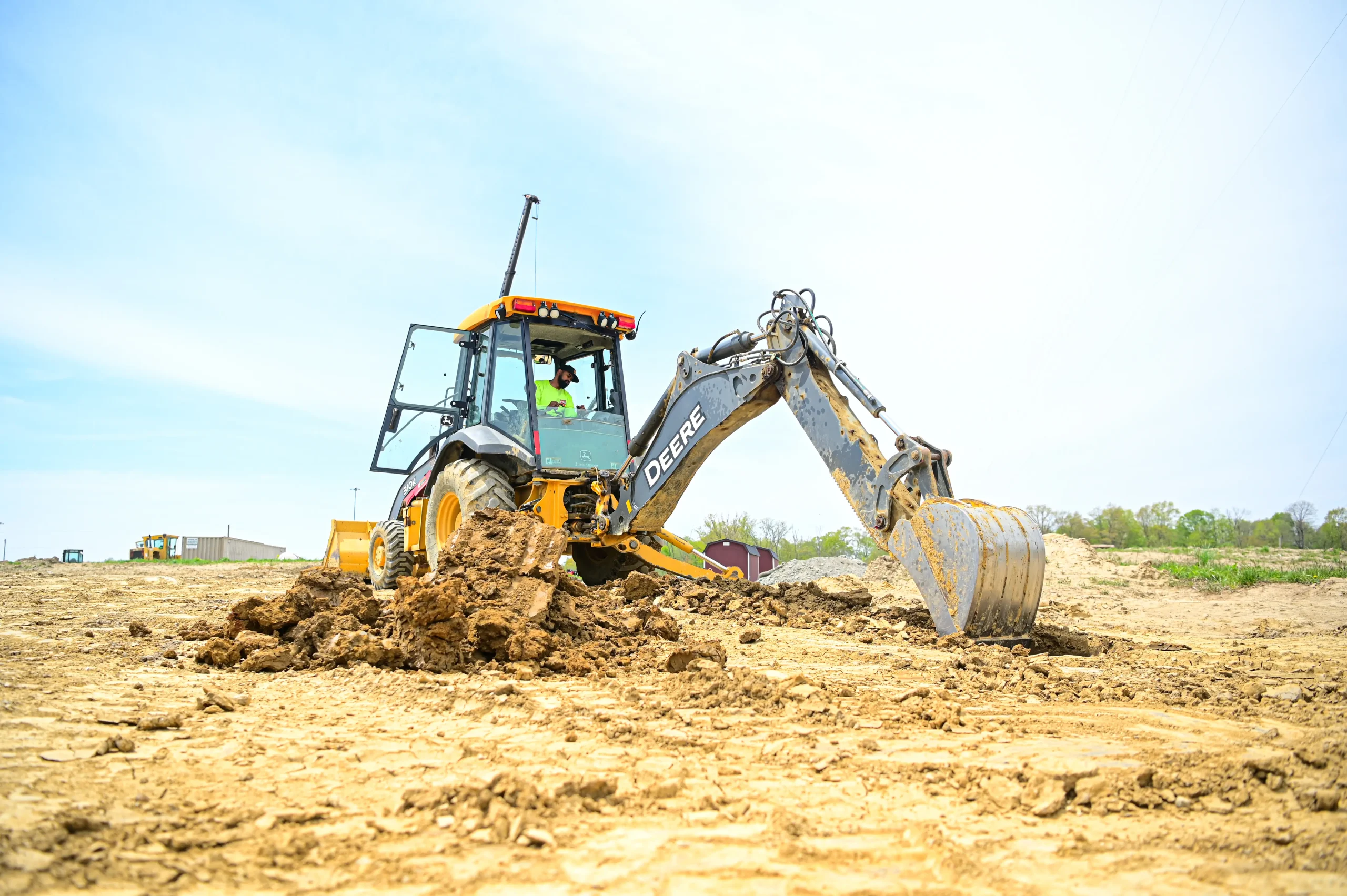
From there, instruction moves to the equipment yard, where trainees begin with the basics: starting the machine correctly, understanding the control layout, and getting a feel for how the equipment responds. Simple exercises like moving forward and backward in a straight line, turning smoothly, and stopping with control build the muscle memory that is the foundation for how to operate heavy equipment.
Mastering Control, One Motion at a Time
Once the basics feel natural, training shifts to precision. Students practice digging trenches to specific depths, moving material without spilling it, and setting loads down gently instead of dropping them. These drills aren’t about speed. They’re about control, because a skilled operator should be able to place material exactly where it needs to be without wasted movement or wasted time.
For those training on cranes specifically, this stage introduces rigging basics, hand signals, and load calculations, since operating a crane safely means understanding the entire lifting system, not just the controls in the cab. Programs like PTS’s crane operations course build toward NCCCO certification, the industry-recognized credential that most employers require before they’ll put someone behind the controls of a crane on a real job site.
Learning to Read the Site, Not Just the Machine
A surprising amount of training on how to operate heavy equipment has nothing to do with the machine itself. Operators need to read the ground they’re working on, anticipate what coworkers on foot are doing, and adjust to weather, visibility, and changing site conditions. Instructors walk students through these scenarios repeatedly until situational awareness becomes automatic, because on a real job site, the machine is only half the equation.
Building Toward Real Credentials
One aspect that separates a structured training program from simply “figuring it out” on the job is the credentialing that comes at the end. Programs at PTS work toward nationally recognized NCCER credentials, giving graduates paperwork that verifies their skills to employers, not just experience they have to describe in an interview. For crane-specific training, NCCCO certification serves the same purpose and is often a hard requirement rather than a preference.
Why the Fundamentals Matter Long After Training Ends
Every experienced operator started with the same basic techniques: proper mounting and dismounting, smooth control inputs, correct pre-shift inspections, and situational awareness. These fundamentals don’t disappear once someone lands a job. They become the foundation that more advanced skills, like operating multiple equipment types or handling complex lifts, are built on.
For anyone considering a career operating heavy equipment or mobile cranes, the takeaway is simple: The fastest path to learning how to operate heavy equipment means working through the fundamentals systematically. At PTS, we structure our curriculum so that by the time you’re on a real job site, the basics are second nature and you can focus on the work in front of you.
Ready to take the next step? Explore our training for heavy equipment operators.