 Proudly Serving Veterans

- Jul 24, 2026
- PTS Staff
- Heavy Equipment Operation
- 0 Comments
Every heavy equipment operator has one job that comes before all others: getting home safe at the end of the day. Long before an operator ever moves dirt on a live job site or swings a crane boom over a busy work zone, that instinct for safety has to be the priority. That’s the real foundation of a career in heavy equipment and crane operation — and it’s why safety and job site awareness sit at the center of quality training programs.
At PTS, there’s nothing more important than the safety of our students — in our training courses and when they graduate and head out in the field — which is why heavy equipment job site safety is incorporated into every part of our curriculum.
Safety Comes First
Construction and heavy equipment work consistently ranks among the more hazardous fields in the country. Excavators, dozers, loaders, and mobile cranes are powerful machines, and a lapse in attention around them can have serious consequences — not just for the operator, but for everyone working nearby. That’s why reputable training programs don’t treat safety as a single lecture bolted onto the front of a course. Instead, it’s woven into every phase of instruction, from the first day in the classroom to the final hours behind the controls.
Students learn to read a job site the way a seasoned operator does: identifying blind spots, understanding swing radius, recognizing unstable ground, and communicating clearly with spotters, riggers, and other crew members. These aren’t abstract concepts — they’re the daily realities of heavy equipment job site safety for operating machinery around people, structures, and utilities.
Classroom Fundamentals Before the Controls
Good training starts with a solid classroom foundation. Students study OSHA regulations, equipment-specific hazards, load charts, rigging basics, and the standardized hand signals used across the industry. This groundwork matters because awareness on a job site isn’t just about watching the machine in front of you — it’s about understanding the entire environment: overhead power lines, trench stability, other equipment in motion, and the people on foot moving through the area.
Programs built around NCCER and NCCCO standards — like those at PTS — tie this classroom knowledge directly to nationally recognized credentials. That means students aren’t just learning “the PTS way” of doing things; they’re learning the standards that employers across the country expect and trust.
Hands-On Training Reinforces the Habit
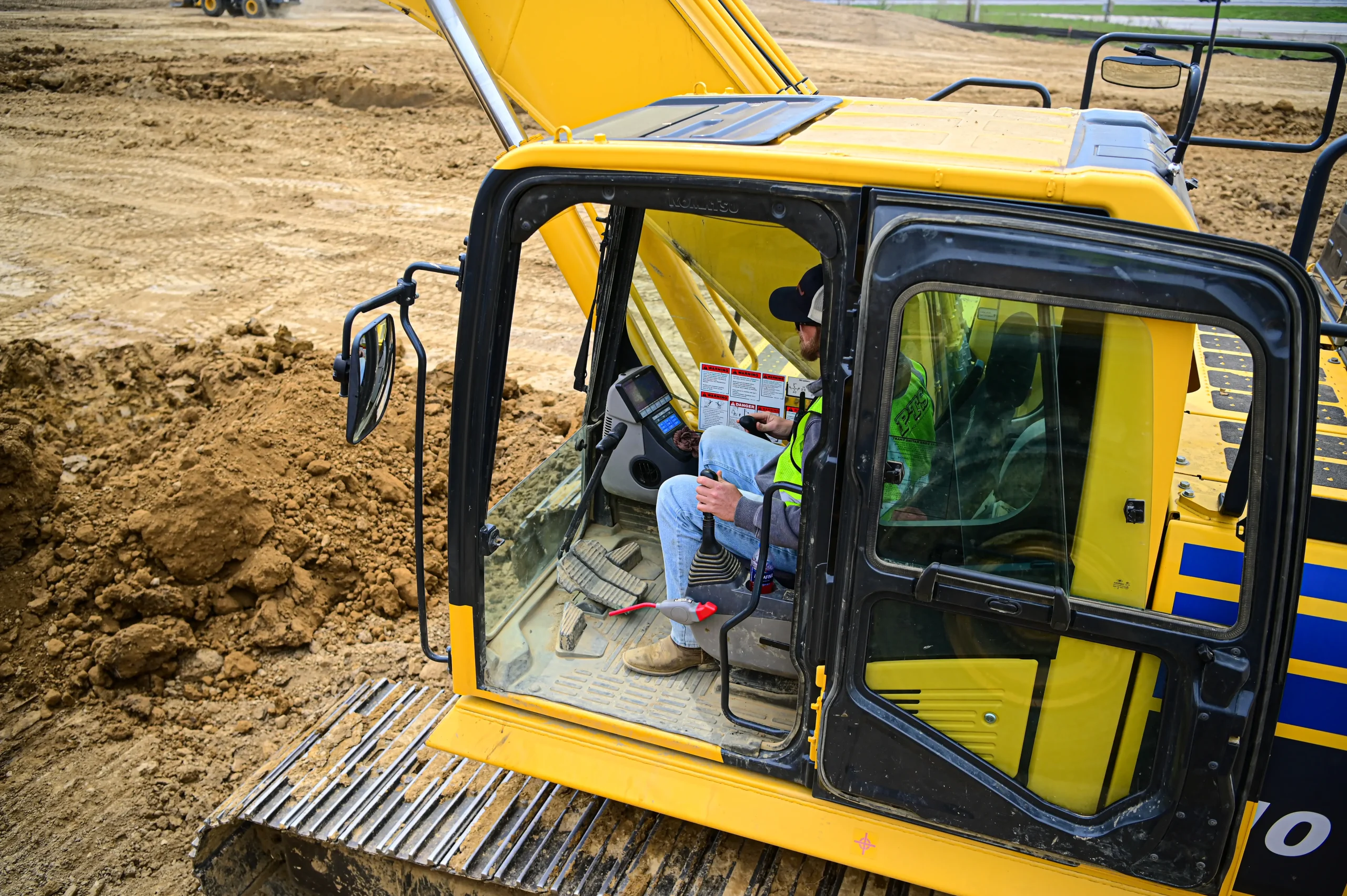
Knowledge is only useful when it’s practiced under real conditions. That’s where hands-on training becomes essential for heavy equipment job site safety. Working directly with instructors on actual equipment — whether it’s an excavator, skid steer, dozer, or mobile crane — gives students the chance to build safe habits before they ever step onto a paid job site. Instructors watch for the small things: proper pre-operation inspections, mirror checks, communication with ground crew, and deliberate, controlled movements rather than rushed ones.
This repetition matters. Safe operation isn’t something you can memorize once and forget. It has to become second nature, the same way a driver instinctively checks mirrors before changing lanes. Training environments give operators the space to build that instinct without the pressure and risk of a live commercial site.
Carrying It Into a Career
The habits formed during training don’t stay in the classroom. Employers in construction, energy, mining, and municipal work actively look for operators who’ve been trained to think about the whole job site, not just the machine in front of them. A well-trained operator reduces risk for the crew, protects equipment and infrastructure, and builds a reputation that opens doors to steadier, better-paying work.
For anyone considering a career change into heavy equipment or crane operation, it’s worth remembering that the technical skills — running the machine, reading the load chart, executing a smooth lift — are only half the picture. The other half is awareness: knowing what’s happening around you at all times and making the safe choice automatically, even under pressure.
That combination of hands-on skill and ingrained safety awareness is what turns a student into a job-ready operator, and it’s the standard that quality training programs strive to instill in every class they run.
Ready to see how heavy equipment job site safety factors into operator training? Schedule a tour of our facility today for a $500 tuition reduction scholarship.